

Guides Safety
Selling an Inherited Watch in the US: What to Do First
Before an inherited watch can be sold, one question has to be settled: who has the legal authority to sell it. That depends on whether the estate is going through probate, what the will says, and the law of the state where the deceased lived, which varies considerably. Once authority is clear, get an independent valuation before taking an offer, and talk to a CPA, because inherited property usually gets a basis stepped up to its value at the date of death, which often changes the tax answer completely.
An inherited watch arrives with two things attached that an ordinary sale does not have: other people with a potential claim on the proceeds, and a tax position that is not the same as if you had bought it yourself. Both are easier to handle at the start than to unwind after the watch has been sold.
None of this is a reason to keep a watch you do not want. It is a reason to take the steps in order.
First: who is allowed to sell it
A watch in an estate is estate property until it is distributed. Selling it before you have authority can create a real problem with beneficiaries, and in a contested estate it is the kind of thing that ends up in front of a judge.
- Find out whether probate is openIf the estate is in probate, the executor or personal representative named in the will, or appointed by the court, is normally the person who can sell. Letters testamentary or letters of administration are the document that proves it.
- Check how the watch was leftA watch specifically bequeathed to a named person is different from one that falls into the general residue of the estate. If it was left to you by name and probate is complete, it is yours to sell.
- Know that the state mattersProbate thresholds, small-estate procedures and spousal rights differ substantially from state to state, and community property states handle marital assets differently again. The relevant law is usually that of the state where the deceased was domiciled, not where you live or where the watch is.
- Get the other beneficiaries on the recordIf several people share the residue, get written agreement about selling and about how proceeds are split, before the sale. An email thread everyone has replied to is worth a great deal later.
- Ask an estate attorney if any of it is unclearParticularly with no will, a contested estate, or a watch that several people believe was promised to them. One consultation is inexpensive relative to a dispute.
Second: find out what it actually is
Families are often wrong about an inherited watch, in both directions. A piece everyone assumed was costume turns out to be a steel sports reference worth five figures. A watch described for years as valuable turns out to be a well-made tribute. Neither is unusual.
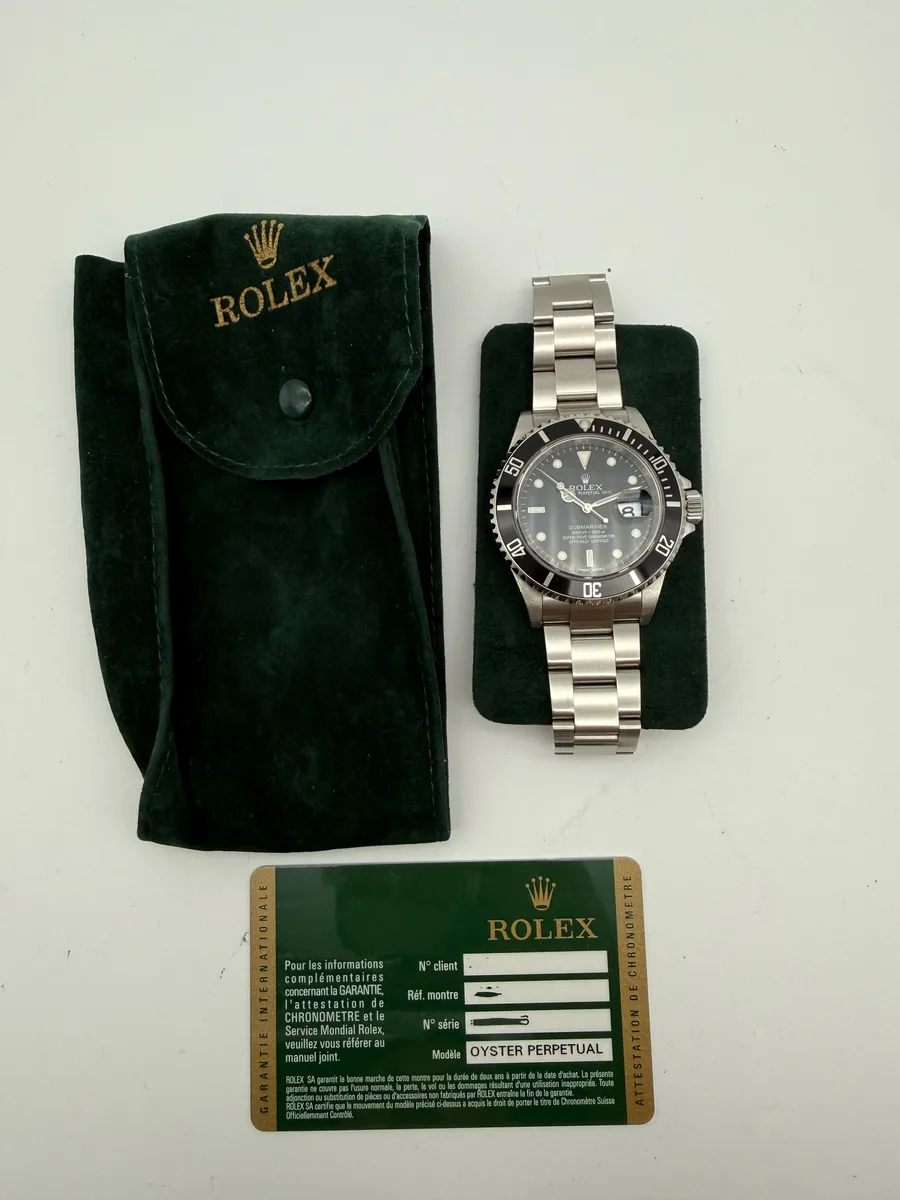
Start with the reference number engraved between the lugs at 12 o'clock, and look for paperwork: warranty card, original receipt, service invoices, insurance schedules. An old homeowner's policy rider is often the single most useful document in the drawer, because it names the watch and gives a value and a date.
Third: resist the urge to clean or restore it
The instinct with an inherited watch is to have it tidied up before showing it to anyone. It is the single most expensive instinct in this whole process. A polish removes metal and softens the factory edges permanently, and a collector pays for original surfaces. Replacing a faded bezel insert or an aged dial with fresh parts can remove exactly the character the market pays a premium for.
Wipe it with a dry cloth. Leave everything else, including a service, until a buyer has seen it as it is. If it needs work, that is a conversation to have after the valuation, not before.
Fourth: the tax question, and why inheritance changes it
If you bought a watch and later sold it for more, your gain is measured against what you paid. Inherited property generally works differently: the basis is usually stepped up to the fair market value at the date of the owner's death. In practice that often means a watch sold reasonably soon after an inheritance shows little or no gain, because the sale price and the stepped-up basis are close together.
That is the general rule, not your answer. It is why a date-of-death valuation is worth having in writing: it establishes the basis. And it is why the sequence matters, because a documented valuation obtained at the right time is much easier than reconstructing one later.
Fifth: get a real valuation before an offer
An offer is not a valuation. Ask for a written opinion based on your specific reference and its condition, and get more than one. If a buyer will not put a number in writing against the reference, that tells you what the number is worth.
- The reference number, not the model name.
- Condition described specifically: dial, hands, bezel, case edges, bracelet stretch.
- What paperwork exists, and whether it matches the watch.
- Service history, honestly, including "unknown".
- Whether the quoted number is firm or subject to inspection.
A sensible order
- Establish who has authority to sell, in writing.
- Gather the watch, the paperwork, and any insurance schedule.
- Identify the reference and photograph the watch properly.
- Get a written valuation, including a date-of-death value if relevant.
- Speak to a CPA if the value is significant.
- Agree with any co-beneficiaries how proceeds are divided.
- Then, and only then, compare offers and sell.
The expensive mistakes with an inherited watch all happen in the first week, before anyone has found out what it is.
If you would like help with the valuation step
WatchCash values inherited watches in writing, including a date-of-death value where an estate needs one, with no obligation to sell. Send photographs and the reference to start, or bring it to the main US location at 110 E Broward Blvd #1700 in downtown Fort Lauderdale by appointment. We will tell you plainly if a watch is worth less than the family believes, and we will say so if it is worth considerably more.
Common questions
Can I sell a watch that was left to me in a will?
Once the estate has been administered and the watch distributed to you, yes. While probate is open, the executor or personal representative is normally the person with authority to sell, evidenced by letters testamentary or letters of administration.
Do I pay tax on an inherited watch I sell?
Often little or none, because inherited property generally receives a basis stepped up to the fair market value at the date of death, leaving a small gain if you sell soon after. That is the general rule and not advice on your situation, so get a date-of-death valuation in writing and ask a CPA.
Should I have an inherited watch serviced or polished before selling?
No. Polishing permanently removes metal and softens factory case edges, and replacing aged parts can remove the originality the market pays a premium for. Show it as it is and discuss any work after the valuation.
Several of us inherited the watch together. What should we do first?
Agree in writing who handles the sale and how proceeds are divided before anything is sold, then get an independent written valuation so every beneficiary is working from the same number.
What if there was no will?
Then state intestacy law decides who inherits and who may be appointed to administer the estate, and those rules differ by state. Speak to an estate attorney licensed where the deceased was domiciled before selling anything of significant value.
Ready to sell?
Get a free, no-obligation valuation. We value your exact reference and explain how we reached the number.
Get your free quote