

Guides Selling
The Seven Photographs That Get You an Accurate Offer
Seven photographs let a buyer quote accurately without the watch in front of them: the dial straight on, the caseback, the reference between the lugs, the clasp, the full bracelet, the side profile of the case, and one frame of any damage. Shoot them in indirect daylight with no flash. Good photographs mean the number you are quoted is the number that survives inspection.
A remote quote is only as good as what the buyer can see. Vague photographs produce a cautious range, and a cautious range usually means the low end. Clear photographs produce a tight number, and they also protect you: they are the record of the exact watch you sent, which matters if anything goes wrong in transit or on a return.
Set up once, in two minutes
- Indirect daylight, near a window but out of direct sun. No flash, ever: it blows out the crystal and hides the dial.
- A plain, mid-tone surface. A gray or stone countertop is ideal. Not glass, not a patterned cloth.
- Clean the crystal with a dry microfiber cloth. Do not use any liquid.
- Tap to focus on the dial text, not the center of the frame.
- Hold the phone parallel to the dial rather than leaning over it, so the dial is not distorted.
The seven
- 1. Dial, straight onThe whole dial square in frame, text legible, hands ideally not covering the brand or the date. This is the photograph a buyer reads first.
- 2. CasebackFlat on, in focus. On some references it is engraved, on others plain, and either way a buyer wants to see whether it has been opened carelessly or engraved personally.
- 3. The reference between the lugs at 12 o’clockTurn the watch so the top lugs face you and the bracelet folds away. Get close enough that the engraving is readable. This single photograph is what converts a guess into a quote.
- 4. The clasp, openClasps carry codes and brand marks, and they are a common place for a replacement part to show up.
- 5. The full bracelet or strap, laid flatShows length, how many links are present, and stretch. Include any removed links you still have, because they are worth money and are routinely forgotten.
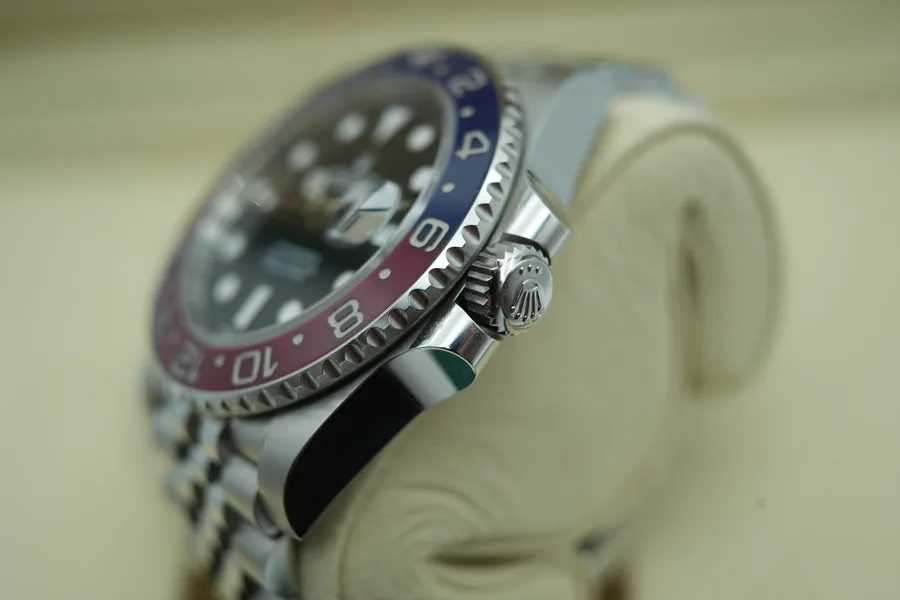
- 6. Side profile of the caseFrom the 9 o’clock side, level with the case. This is where over-polishing shows: factory lug edges are crisp, polished ones look melted.
- 7. Any damage, deliberatelyA scratch, a ding, a chipped bezel, a worn crown. Photograph it clearly and point it out.
The two mistakes that cost money
The first is hiding damage, or photographing it so softly that it reads as a reflection. It never works. The watch is inspected, the damage is found, and the revised number lands while you are standing there with no leverage and a trip already made. Disclosed damage is priced once. Discovered damage is priced twice, and the second price includes the buyer’s doubt about what else was not mentioned.
The second is photographing a different watch. It sounds absurd and it happens with families and estates: the photographs come from an old insurance file and show the piece that was sold years ago. Shoot the watch that is in front of you, today.
What to write alongside them
- The reference number, typed out.
- Whether you have the warranty card, box and any service paperwork.
- When it was last serviced and by whom, or that you do not know.
- Anything you know about its history, including if it was inherited.
- Any damage, listed, even the pieces you think are too small to mention.
Photographs that show the flaws get you a number that holds. Photographs that hide them get you a number that moves.
Send them and get a range
Send the seven photographs and the reference to WatchCash and you get a written range against your exact watch before anything travels. If you would rather be there in person, the main US location is 110 E Broward Blvd #1700 in downtown Fort Lauderdale, by appointment.
Common questions
Can a watch buyer really quote from photographs?
Yes, within a range, provided the photographs show the reference between the lugs, the dial, the case profile and any damage. The number is then confirmed at inspection, and good photographs are what keep those two numbers the same.
Should I use flash?
No. Flash blows out the crystal and hides the dial. Use indirect daylight near a window, out of direct sun.
Do I need a professional camera?
No. A recent phone is more than enough. Light, a plain background and holding the phone parallel to the dial matter far more than the camera.
Should I photograph the scratches?
Yes, deliberately and clearly. Disclosed damage is priced once. Damage found at inspection gets priced twice, because the buyer also discounts for what else might not have been mentioned.
Ready to sell?
Get a free, no-obligation valuation. We value your exact reference and explain how we reached the number.
Get your free quote