

Guides Know your watch
How a Buyer Reads Your Watch in the First 90 Seconds
A professional buyer works in a fixed order: the reference, then the dial and hands, then the case edges, then the bezel and crystal, then the bracelet and clasp, then the movement. Each step rules something out. Within about 90 seconds they know what the watch is, whether the parts belong together, and roughly where the number will land. Knowing the sequence lets you describe your watch in the same terms.
Watching someone value a watch can feel like being judged. It is far less mysterious than it looks. They are working through a checklist, and every item on it is answering a specific question.
The sequence
Reference first, always
Between the lugs at 12 o’clock. This decides which market the watch sits in before anything else is considered. Until the reference is known, nothing else is worth measuring.
Dial and hands
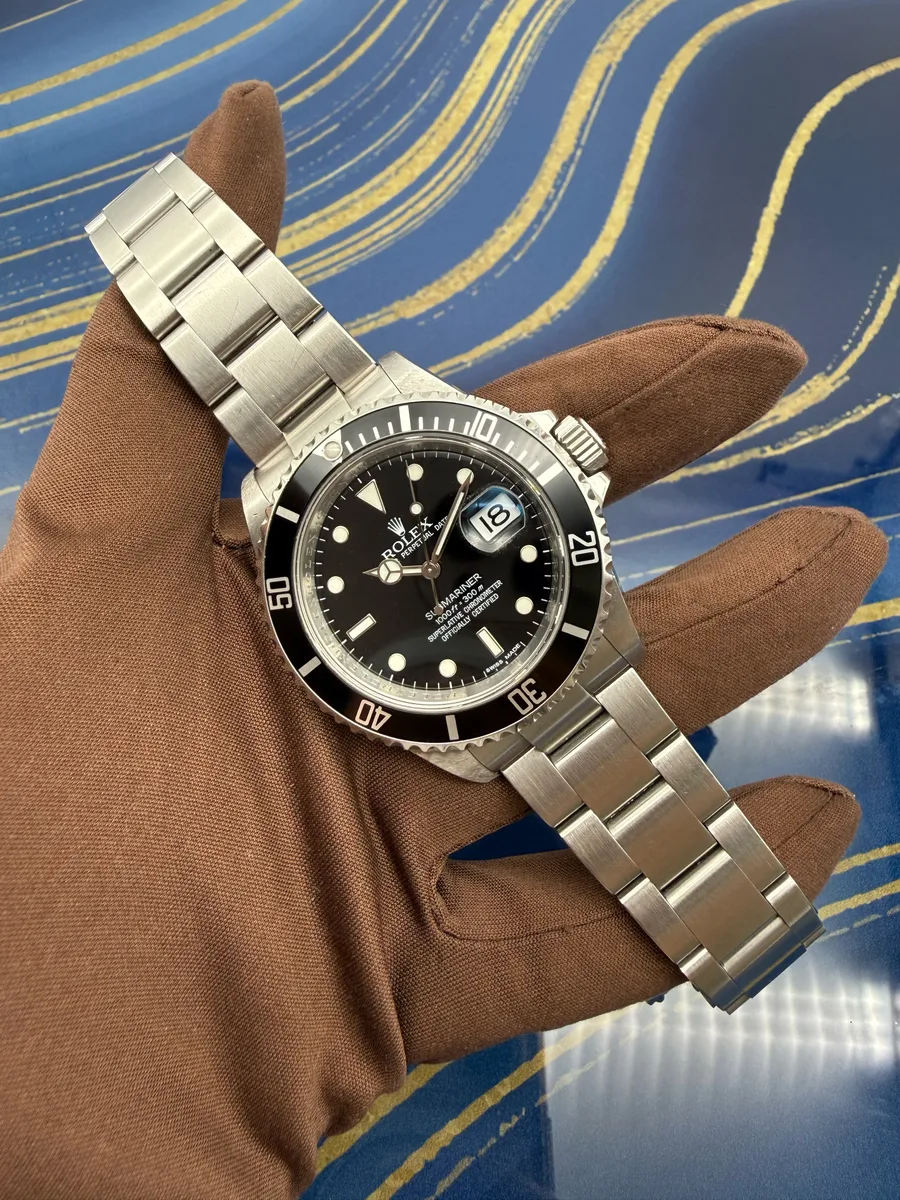
The buyer is checking whether the dial is original and whether it has been refinished. Printing that looks slightly soft, lume plots that do not match the hands in color or age, a date font that is not quite right: each suggests a replaced or restored part. On a vintage watch a refinished dial can cut the value substantially, and an original dial with even, honest aging can add a premium.
Case edges and lugs
This is the over-polishing check, and the reason this site keeps telling people not to polish. Factory lug edges are crisp, with a defined transition between the brushed top and the polished flank. Heavy polishing rounds that away, and it cannot be undone. A buyer can read how many times a case has been through a wheel.
Bezel and crystal
Are they original to the watch and to each other. A faded insert that has aged evenly is desirable on vintage; a new insert on an otherwise aged watch tells a buyer a part was swapped. On references with a laser-etched crown in the crystal at 6 o’clock, its presence and quality are a quick authenticity cue.
Bracelet and clasp
Stretch between links, codes on the clasp and end links, and whether all of it is the right bracelet for the reference. Bracelets are expensive and frequently replaced, so this is where mixed parts surface.
Then the movement
If the caseback comes off, the buyer is confirming the movement is correct for the reference, looking at finishing and at whether non-original parts have been fitted, and judging whether it is due for service. On a watch of any value this is also the definitive authenticity check.
What they are really deciding
- Is this watch what it claims to be.
- Do all of its parts belong together, and are they original.
- Has it been restored in ways the market penalizes.
- What will it cost to make it saleable.
- How quickly will it sell at the number being considered.
The last two are why an offer sits below retail, and they are worth understanding rather than resenting. The buyer is pricing their own risk and their own costs, not insulting your watch.
How to present your watch
- Lead with the reference number.
- Hand over whatever paperwork exists, including partial.
- Point out the damage yourself, before they find it.
- Say what you know about service history, with the gaps included.
- Ask what specifically is moving the number, up or down. A good buyer will show you.
Nothing you can say will change what the watch is. What you say changes how much of the rest a buyer believes.
Watch it happen
WatchCash authenticates and values in front of you, and will walk you through each step on your own watch rather than disappearing into a back room. The main US location is 110 E Broward Blvd #1700 in downtown Fort Lauderdale, by appointment.
Common questions
What is the first thing a watch buyer looks at?
The reference number between the lugs at 12 o’clock. It decides which market the watch sits in, and nothing else is worth measuring until it is known.
Can a buyer tell if my watch has been polished?
Yes, easily, from the side profile. Factory lug edges are crisp with a defined brushed-to-polished transition, and polishing rounds that away permanently.
Will they open the caseback?
On a watch of any significant value, usually yes, with your agreement. It confirms the movement is correct for the reference, shows whether non-original parts have been fitted, and is the definitive authenticity check.
Should I admit my watch has problems?
Yes. Disclosed faults are priced once; faults discovered at inspection are priced twice, because the buyer also discounts for what else may not have been mentioned.
Ready to sell?
Get a free, no-obligation valuation. We value your exact reference and explain how we reached the number.
Get your free quote